The artefact
This is the printed card that was presented to each persona during the flyer evaluation interviews. Personas experienced it as a physical object arriving in their letterbox — weight and texture first, content second.
Physical specifications
The card's physical presence was a deliberate design choice. At 300g, it is closer to cardboard than paper — noticeably heavier than a standard flyer. The square format (18×18cm) is unusual for letterbox post, which is almost always A5 or DL. Both characteristics are designed to differentiate it from junk mail at the moment of sorting.
Front side
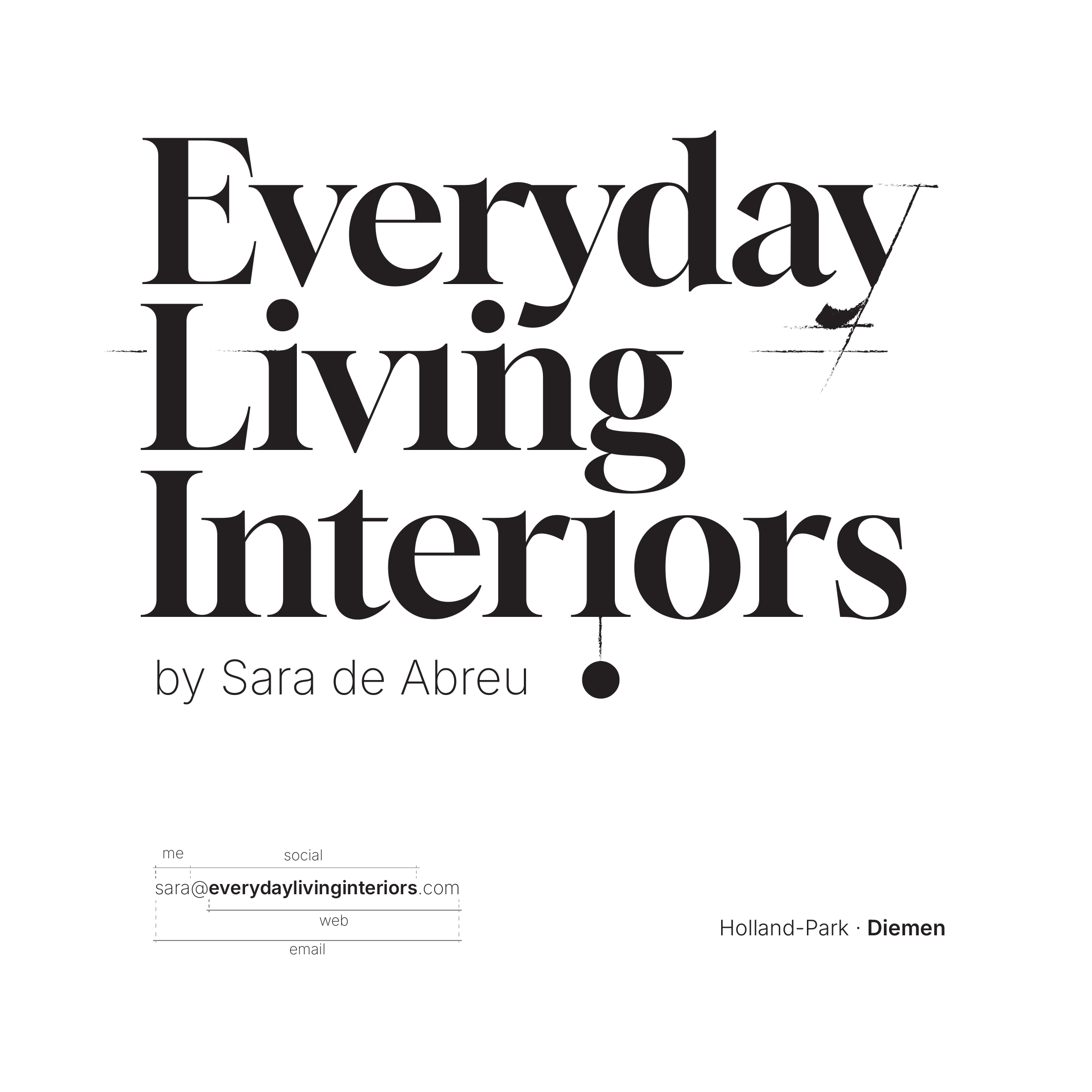
The front carries minimal information:
- Brand name — "Everyday Living Interiors" in large Gloock serif, dominating the card
- Personal name — "by Sara de Abreu" positioned beneath
- Contact cluster — bottom-left: labels for 'me', 'social', 'email', 'web' with the email address sara@everydaylivinginteriors.com
- Location signal — bottom-right: "Holland-Park · Diemen" with Diemen in bold
Design intent: The front says who and where — nothing else. No images, no tagline, no description of services. The minimalism is the message: confidence, restraint, premium quality. The local signal ("Holland-Park · Diemen") anchors it to the recipient's neighbourhood.
Back side
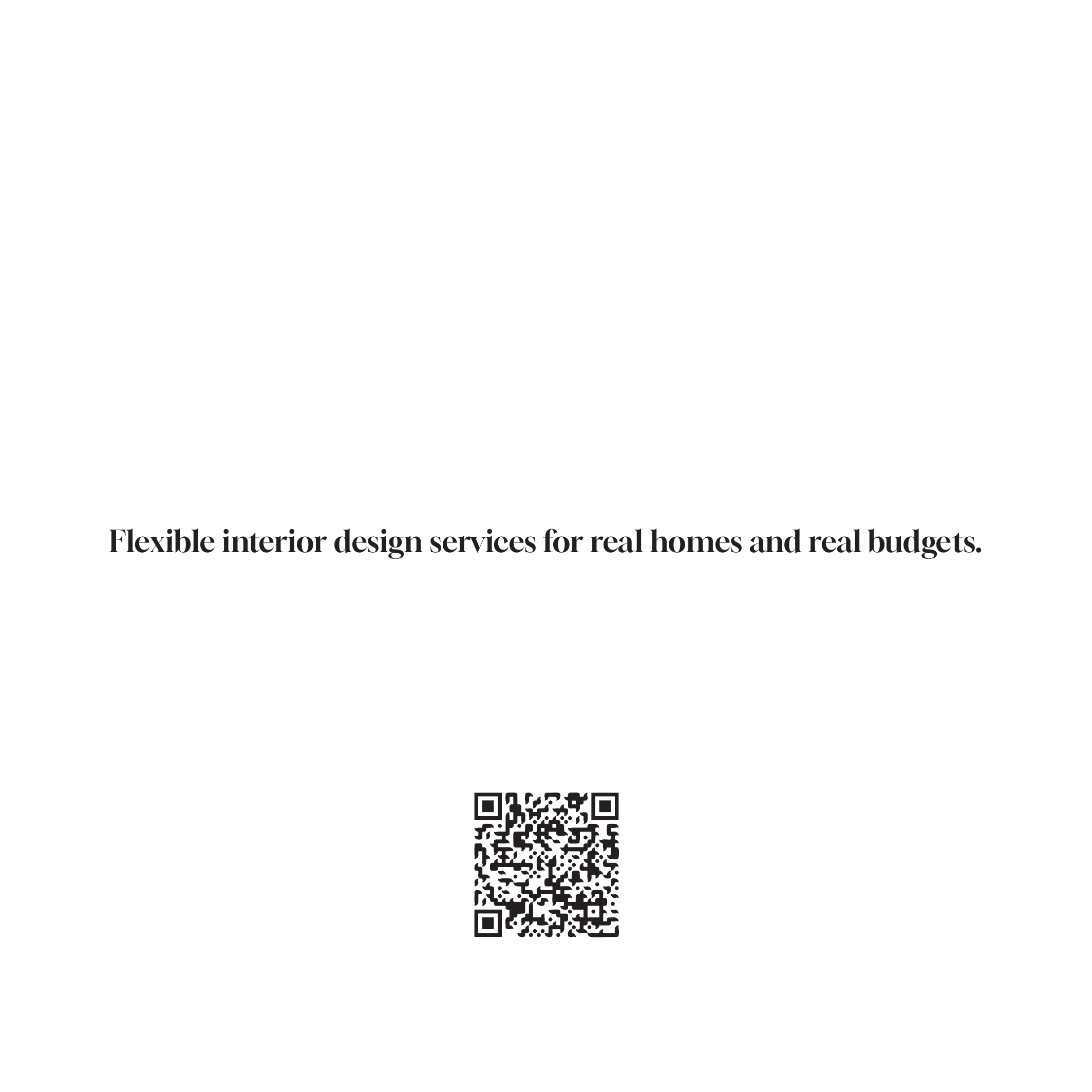
The back carries two elements:
- Tagline — "Flexible interior design services for real homes and real budgets." in Gloock serif
- QR code — centred below, linking to the ELI website
Design intent: One line to communicate the service category, positioning, and accessibility. "Real homes and real budgets" is doing the heavy lifting — it attempts to break the exclusion barrier that "interior design" creates for renters, lower-income residents, and people who have never considered the category. The QR code is the sole call-to-action.
What the research found
The card was evaluated by six Holland Park residents in synthetic interviews. Key findings about the artefact itself:
- The stock saved it — 6/6 personas kept the card past the initial letterbox sort. The 300g weight was the primary reason: it didn't feel like junk mail.
- The minimalism polarised — Design-aware residents read it as confidence; others read it as emptiness or insufficient information.
- "Holland-Park · Diemen" split the audience — For newer residents, it was a trust signal ("She's here?"). For long-term Diemen-Zuid residents, "Holland-Park" felt like a developer's marketing label, not their neighbourhood.
- The QR code was a dead end for half the personas — Older residents and those unfamiliar with QR codes wanted a printed URL.
- The missing price was the biggest barrier — Every persona assumed interior design would be expensive. Adding "from €80" was the single most recommended change.
Read the full analysis in the flyer insights report.